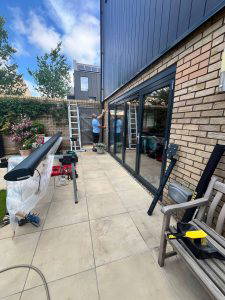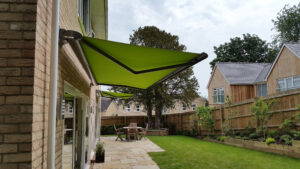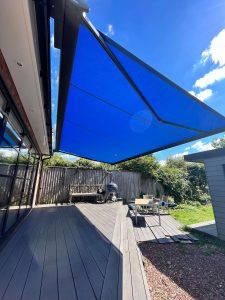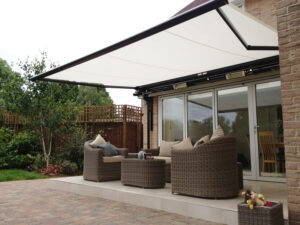
When choosing a garden awning, one thing homeowners often consider is whether it can be left open in the rain. In the UK, a warm afternoon can quickly turn into a sudden shower, and many want to know how much protection their awning can realistically provide.
The honest answer is that it depends on the type of awning, how it has been installed and how you intend to use your outdoor space. A traditional retractable awning is designed primarily to provide shade during warmer weather. At the correct pitch, it can cope with a short period of light rain — typically no more than a couple of hours — but it’s not designed or intended to replace a permanent structure during heavy or prolonged rainfall.
That doesn’t mean every homeowner needs a fully waterproof outdoor system. In many gardens, a traditional retractable awning is still the most practical option. Our role at Cambridge Awnings is to help you understand what each type of awning is capable of and help you choose a solution based on your specific needs.
Are Retractable Awnings Waterproof?
One of the biggest misconceptions about retractable awnings is that all outdoor fabrics are completely waterproof. Most modern awning fabrics are designed to be weather-resistant. They can handle exposure to sunlight, wind, and occasional rain, but there is an important difference between resisting rain and being designed to provide full waterproof protection.
If your main reason for installing a garden awning is to create shade and make your outdoor living space more comfortable during sunny weather, a traditional retractable awning might be exactly what you need. However, if you want to use your outdoor space during wet weather, you might need to consider a system designed with waterproofing in mind.
This is where more structural products, such as a Weinor patio roof from our Terrazza range, can be more suitable. They offer a different level of coverage and are designed for a wider range of conditions. The important point is that more protection isn’t automatically better. It only becomes worthwhile if you will genuinely benefit from the additional features.
Why Standing Water Should Never Be Ignored
A properly installed awning should allow rainwater to run off the fabric rather than collect in one area. This is why proper installation and pitch are so important for reducing the risk of pooling.
Standing water can put unnecessary weight on the awning. As water collects, the fabric can also begin to stretch and sag, allowing even more water to gather in the same area. Over time, this places additional strain on the fabric, folding arms and fixing points. This isn’t something homeowners should ignore. If water is collecting on the awning, it’s worth investigating why.
The pitch might not be suitable, the fabric might have stretched over time, or debris might be preventing water from draining properly. Addressing the cause early is the best way to prevent repeated stress on the structure. At Cambridge Awnings, we always assess the installation area carefully before recommending a product. The available height, projection, wall structure and surrounding features all influence how an awning should be positioned.
What Should You Do if Your Awning Gets Wet?
Occasionally, an awning will get caught in the rain. This is normal and doesn’t mean the fabric will be damaged. The important thing is what happens afterwards.
If the weather improves, we recommend extending the awning again and allowing it to dry fully before leaving it closed for a long period. Keeping damp fabric tightly rolled inside the cassette can trap moisture, increasing the risk of marks, odours or mildew developing. This is particularly important when the awning isn’t being used regularly. It’s easy to retract an awning after a wet afternoon and forget about it, but allowing the fabric to dry properly helps protect it.
That said, drying the fabric shouldn’t come before protecting the awning. If heavy rain is accompanied by strong winds, retracting the awning is usually the safer decision. The mechanism, arms and fixings can be under considerable stress in exposed conditions, so protecting the whole system is more important than avoiding moisture on the fabric.
Does Awning Pitch Affect Rain?
Yes, pitch plays an important role in how an awning handles rain. The correct angle allows water to drain away and helps prevent the fabric from becoming overloaded. However, there are lots of factors to consider when choosing the pitch, such as:
- Available wall height
- Required projection over the patio
- Head clearance underneath the awning
- Position of gutters and exterior features
- How the space will be used day to day
A steep pitch might improve drainage but could reduce usable space under the awning. A shallow pitch might provide more headroom but require additional drainage. This is why every installation needs to be considered individually.
Should You Use Wind Sensors?
Wind sensors are a useful addition to many electric awnings, particularly for homeowners who won’t always be outside when weather conditions change. A sensor can detect increased movement and automatically retract the awning, helping reduce the risk of damage.
However, we always explain that sensors are an extra safeguard, not a replacement for sensible use. No sensor can predict every change in weather, and sudden gusts can quickly affect an awning. You should still retract the awning if bad weather is predicted.
The same principle applies to rain. A sensor can be helpful, but it doesn’t change how the awning should be cared for to extend its lifespan.
When is a Waterproof Awning System Worth Considering?
For some homeowners, a traditional retractable awning is all they need. For others, a more substantial structure makes sense. A Weinor patio roof from our Terrazza range might be worth considering if:
- You want to use the outdoor area more regularly throughout the year
- You often entertain guests outside.
- Reliable rain protection is a priority
- The outdoor living area is larger or more exposed
- You want the space to be more like an outdoor room
However, we wouldn’t recommend upgrading to a larger system simply because it offers more features. If a customer mainly wants shade during the summer months, a standard awning might provide the best balance of flexibility, appearance and cost.
Simple Ways to Protect a Garden Awning
Good maintenance isn’t complicated. A few simple habits can help keep your garden awning in good condition all year round:
- Don’t let water collect on the fabric
- Clear any leaves and debris before retracting the awning
- Allow wet fabric to dry whenever possible
- Follow the recommended cleaning guidance for the fabric
- Avoid using harsh chemicals or abrasive cleaning methods
- Check the awning regularly for damage
Small issues are usually easier to resolve when they’re noticed early, so it’s best to quickly check your awning over before and after each use.
Choosing the Right Awning for Your Home
An awning should make your outdoor space easier to enjoy, not create unnecessary maintenance. At Cambridge Awnings, our approach has always been to understand how you want to use your garden and to recommend the solution that genuinely fits your home. For some customers, that will be a traditional retractable awning, and for others, it will be a more weather-resistant system. We won’t ever suggest a more expensive product unless there is a clear benefit to the way you plan to use your space.
Sometimes the simplest solution is the right one. Our job is to provide honest advice, explain the options clearly, and help you choose an awning that works for your home in the long term. For more information about installing an awning, get in touch with us today.