
Do You Need an Awning or a Pergola System for Your Patio?
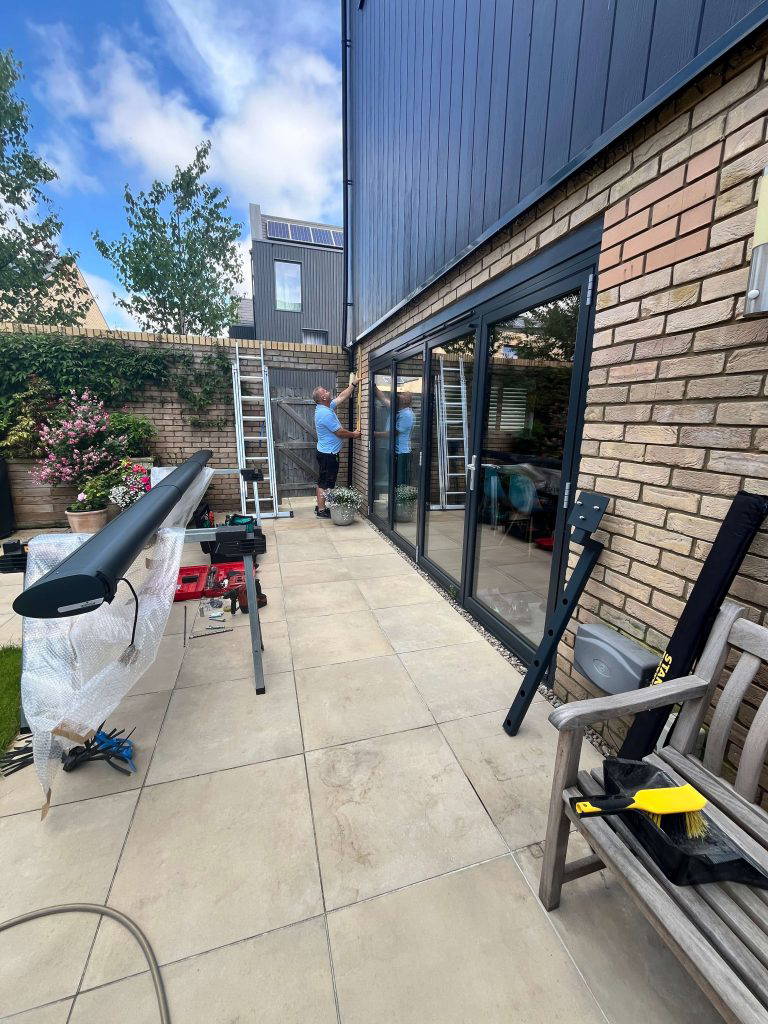
When planning an outdoor living space, one key decision is what type of overhead protection you want. Homeowners often start by comparing a traditional retractable awning and a more structured pergola system. However, choosing the right cover for your patio starts with a simple question: what do you actually want it to do? If your main goal is shade on warm, sunny days, a retractable awning might be all you need. If you want a larger, more defined outdoor area, a pergola system could be worth considering. But if you want dependable protection that lets you use the space year-round and in a wider range of weather conditions, neither is an all-weather solution. This distinction is important. An awning, a pergola system and a glass patio roof can all improve how you use an outdoor space, but they do different jobs. Understanding these differences before choosing a product can help prevent you from installing something that doesn’t meet your expectations. When Is a Retractable Awning the Right Choice? For many patios, a retractable awning is a practical way to create shade exactly when you want it. If you enjoy sitting outside but find the area becomes uncomfortable during strong sunshine, you can extend the awning over the part of the patio you use most. When the sun moves away, or you would rather leave the patio completely open, you can retract it again. This flexibility is one of the biggest advantages of an awning. You don’t need to permanently cover the entire patio just because one seating or dining area needs shade for part of the day. However, awnings are primarily designed for sun protection, and that is an important limitation to understand before buying one. A properly positioned awning set at a suitable pitch can often cope with a brief light shower, but it should be retracted during steady rain. It’s not intended to act as a permanent roof or provide reliable cover in all weather. Wind also needs to be considered. The suitability of an awning depends on the product, the installation, and how exposed the property is. When Might a Pergola System Make More Sense? A pergola system provides more structural support than a traditional folding-arm awning, and in some situations, this offers real benefits. Consider a pergola system for larger areas or patios where you want the shading system to create a more defined outdoor space. For example, you might want to cover a substantial dining area, create a dedicated entertaining space or install a system where additional support is useful. Exposure can also legitimately affect the recommendation. An open garden in rural Cambridgeshire experiences very different conditions from a sheltered Cambridge courtyard surrounded by buildings. Where a patio is particularly exposed, the added support of a pergola system can make it more appropriate than a conventional awning. However, the extra structure doesn’t turn it into an all-weather roof. A pergola system still uses a fabric covering. Although the supporting structure changes how the system performs compared with a folding-arm awning, it shouldn’t be confused with the permanent weather protection provided by a solid or glazed roof. This is especially important if your main reason for investing in overhead protection is to make the space usable year-round. When is a Glass Patio Roof the Better Option? If you want to sit outside throughout the year and need reliable protection from rain, it’s worth looking beyond fabric shading altogether. A glass patio roof, such as the Weinor Terrazza range, is designed to provide more protection than an awning. Rather than giving you temporary overhead shade, it creates permanent weather protection over the patio. This can be a much better starting point if your priority is keeping an outdoor dining or seating area covered in wet weather. It can also make more sense if you’re creating an outdoor area you want to use frequently rather than occasionally pulling out shade on sunny days. Of course, a patio roof and an awning aren’t interchangeable. A glass roof provides permanent coverage, whereas a retractable awning gives you the choice between sun and shade. The right option depends on which matters more to you. If someone tells us they want something they can use regardless of the weather, we wouldn’t describe a fabric awning as an all-weather solution. A patio roof is usually the more appropriate option. How Does the Size of Your Patio Affect the Decision? Patio size can influence your choice, but it shouldn’t be the only factor. A large patio doesn’t automatically need the largest shading system available. It often makes more sense to think about the part of the patio you actually use. If your dining table only takes up a small section of a much larger terrace, for example, covering that area effectively might be more useful than trying to shade the whole space. Equally, a smaller patio could suit a pergola system if you specifically want to create a defined outdoor room. We look at where you sit, how the sun moves across the garden and which areas become uncomfortable during the day. The property itself is also important. A traditional awning usually needs a suitable external wall with enough space and strength to support the installation. If the wall isn’t suitable, other fixing methods, such as spreader plates or a supporting structure, may be possible. The building’s construction, available fixing points, and the position of doors and windows can all affect what is practical. So, simply measuring the width of the patio doesn’t tell us enough to make the best recommendation. Do You Need More Than Overhead Shade? Not every garden has the same needs, and it’s always worth considering where the sunlight is actually coming from. An overhead awning can work well when the sun is high, but it can’t solve every shading problem. Low sun entering from the side may require vertical shading instead. A Weinor Paravento side screen can provide extra shade where sunlight reaches the patio at an angle,
Can a Retractable Awning Protect You From Low Evening Sun?
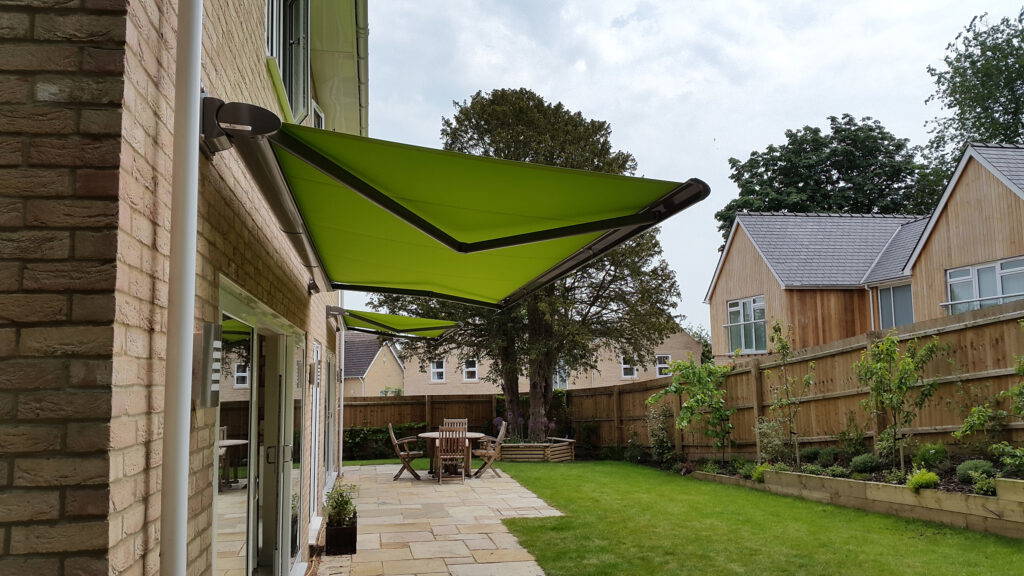
West-facing gardens can be some of the most desirable outdoor spaces. They provide beautiful afternoon and evening sunshine, making them ideal for outdoor dining and relaxing. The difficulty is that the same sunlight can become uncomfortable when it drops lower in the sky. If the sun is high, a retractable awning can create useful overhead shade. But by the evening, the angle changes. Low western sun can travel almost horizontally across a patio, passing underneath an overhead awning rather than being blocked by it. This means simply choosing a larger awning isn’t the answer. If low evening sun is the main problem, we first need to understand where the light is coming from, where you sit and whether you’re trying to shade the patio or stop sunlight reaching doors and windows. Why Is Low Evening Sun Difficult to Manage? The challenge with evening sun isn’t the amount of sunlight; it’s the angle. Around midday, the sun sits higher in the sky, so an awning can provide effective shade and make a patio more comfortable during strong daytime sunshine. Later in the day, the sun drops much lower, especially in west-facing gardens. Instead of shining down onto the patio, the sun shines directly toward outdoor seating areas, windows, or doors. Even with a generous projection, sunlight can still get underneath a patio awning. Simply choosing a larger awning might move the shade edge farther across the patio, but it can’t turn an overhead cover into vertical shading. This is why it’s important to look at how the sun behaves in your garden before deciding what to install. Will a Retractable Awning Still Help? This is one of the most important things to understand before choosing a garden awning. While a retractable awning can provide excellent overhead shade, it’s not designed to block every angle of sunlight throughout the day. In a west-facing garden, the patio gets strong sunshine for several hours before the sun drops low; an awning can provide comfortable shade over seating and dining areas. However, the limitation comes later in the day. As the sun starts to set, more direct light can enter under the front of the awning or from one side. At that point, extending the awning further won’t necessarily solve the problem. This doesn’t mean the awning has stopped doing its job; you’ve just reached the point where overhead shade is no longer the right type of shade for the angle of sunlight. Understanding that before installation helps you choose a system based on what it can realistically achieve rather than expecting one product to solve every type of sunlight throughout the day. What Works Better for Low Evening Sun? When sunlight comes towards you rather than down from above, vertical shading is much more effective. The right option depends on the direction the low sun is entering the patio. In a west-facing garden, the evening sun often comes toward the front of the awning. In this situation, a side screen alone won’t solve the problem. A drop-down front valance can be more effective as it provides vertical shading at the front edge of the awning. Weinor’s Valance Plus is available on the Opal Design II, Topas II and Semina Life awnings. It can drop up to 210 cm, helping block lower sunlight coming toward the front of the patio. However, you must specify this when ordering the awning, as you can’t add it later. Where sunlight reaches the patio from an angle, a Weinor Paravento side screen can provide useful additional shade. It can also help with privacy around a seating or dining area, but it’s designed for sunlight entering from the side rather than directly from the front. External zip blinds are another option, particularly when strong evening sun reaches bi-fold, sliding, or other large glazed doors. As they sit outside the glass, they can intercept sunlight before it enters the room. Does the Position of Your Patio Matter? Very much so. The same awning can perform very differently depending on where it’s installed. A west-facing garden in Cambridge might be partly sheltered by neighbouring buildings, mature trees or fencing, which can block some of the lower evening sun. A more open property elsewhere in Cambridgeshire can continue receiving direct sunlight until much closer to sunset. We also consider where the outdoor seating area is positioned. If your dining table sits directly outside the house, an awning might provide useful shade for part of the afternoon, but if it’s positioned differently, the shadow might fall somewhere you don’t actually need it. Mounting height is important too because it affects where the shade lands as the sun moves. This is why patio width alone tells us relatively little. When we survey a property, we focus on when the sun becomes uncomfortable and exactly where it reaches. Do You Need a Pergola System for Evening Sun? Not simply because the sun is low. A pergola system still provides overhead shading like a retractable awning, so it doesn’t solve the basic problem of sunlight travelling horizontally. If low evening sun is your concern, the key question is whether you need vertical shading. A pergola system might suit a property for other reasons, such as the size of the area being covered, the need for additional structural support, or how you want to define the outdoor living space. Those are separate considerations. We don’t recommend moving to a pergola system purely to address low western sun. What Should You Consider Before Choosing an Awning? Before choosing a garden awning, think about when the patio becomes uncomfortable. If the problem occurs during the middle of the afternoon while the sun is still reasonably high, an overhead awning might provide the shade you need. If the problem happens later in the day, you might need vertical protection as well. It’s also worth separating outdoor comfort from indoor comfort. Shading an outdoor dining table is a different problem from stopping strong evening sunlight coming through large bi-fold or sliding
How Far Should a Patio Awning Project? Why Bigger Isn’t Always Better
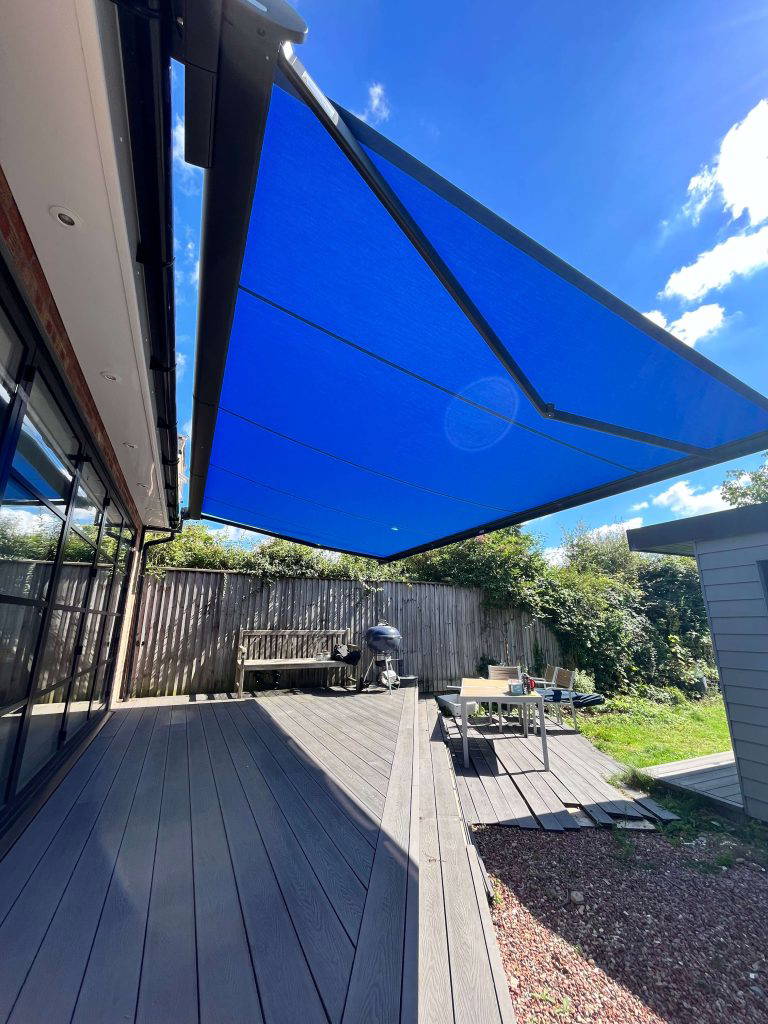
When homeowners start looking at patio coverings, it can be easy to assume the largest awning will automatically provide the best result. More projection means more coverage, so it can seem like the obvious choice. In practice, however, more coverage does not necessarily mean more useful shade. The right projection depends on where you need shade, when you use the garden, how the sun reaches your patio, where your furniture is positioned, and whether you can install the awning on your property. If you mainly want shade over a small dining table close to the house, you might not need a particularly deep projection. If you regularly entertain on a much larger patio, then a bigger awning may make sense. At Cambridge Awnings, when we survey a property, we look at how you use the space. We aim to recommend an awning that makes your garden more comfortable, without encouraging you to pay for extra size that doesn’t genuinely benefit you. Start With the Area You Want to Shade The size of your patio doesn’t necessarily tell us how large the awning needs to be. What matters more is the part of the space you regularly use. For example, you might have a large paved patio but usually sit around a four-person dining table just outside your bifold doors. If that area becomes uncomfortable in direct sunlight, you might not need to extend shade across the entire patio. Another family might have a larger outdoor space with separate kitchen, dining and seating areas. In that case, more projection could be worthwhile because more of the patio is being used at the same time. This is why we prefer to start with a simple question: what are you trying to make more comfortable? You might want shade for outdoor meals, a cooler spot for children to sit, protection from strong afternoon sunshine, or less heat and glare through large glazed doors. Once we know that, we can start working out how much projection is actually useful. Projection and Shade Are Not the Same Thing If an awning projects three metres from the building, it does not create a fixed three-metre rectangle of shade beneath it. The shadow position changes with the sun’s height and direction, the season, the mounting height and the awning’s pitch. That is why choosing a projection from a brochure alone can be misleading. A technically larger awning may still fail to put shade where you expected at the time you most want to use the garden. Think About When You Use the Patio The sun’s position changes throughout the day, which means the shade beneath a retractable patio awning moves too. This is one reason we consider the property’s orientation and the sun path during a survey. A patio that gets strong midday sunshine can behave very differently from one that becomes uncomfortable later in the afternoon. West-facing gardens are a good example. The lower evening sun can get underneath a covering at a much shallower angle, so increasing the projection doesn’t always solve the problem in the way a homeowner expects. Whereas a south-facing garden can experience strong sunlight for a longer part of the day, which creates a different set of requirements. Rather than only looking at the size of your patio, we need to understand when you want to use it and where the shade needs to fall at those times. That gives us a much better basis for deciding what projection makes sense. What Projection Sizes Are Available? The available projection depends on the awning model, its width and the manufacturer’s specification. Domestic folding-arm awnings commonly offer projections around 2 metres, 2.5 metres, 3 metres and 3.5 metres, while selected larger systems may reach approximately 4 metres in suitable configurations. The maximum available projection should not automatically become the target. The correct size still depends on the property, the fixing arrangement and where the useful shade needs to fall. Look at Where Your Furniture Sits Furniture placement is another useful way to judge how much coverage you really need. If the awning is mainly for outdoor dining, think beyond the table dimensions. People need enough shaded space to sit comfortably, move their chairs and use the area without constantly going in and out of direct sunlight. The same applies to lounge furniture. If you have a sofa positioned away from the house, the awning might need to project further to make that part of the patio comfortable. If your seating area is much closer, a smaller projection may be perfectly adequate. You may also want part of the patio to remain uncovered. Some homeowners prefer a shaded dining area while keeping another section open for sunbathing when they want to. We don’t see any benefit in covering every paving slab just because there is space available. Mounting Height Can Affect the Projection The awning’s position is just as important as the patio’s size. We need to consider where the system can safely be installed and how much height is available above doors, windows and other architectural features. Rooflines, gutters, drainage, wall construction and available fixing points can all influence the final installation. This is important because the awning needs to be installed with an appropriate pitch. The pitch helps determine the clearance beneath the awning and also plays a key role in wet weather, as water needs somewhere to run off rather than collecting on the fabric. A very deep projection from a relatively low mounting position may therefore create practical issues. We would be cautious about choosing a projection from a brochure before surveying your property. A measurement that looks right on paper still needs to work properly on the building. Do Not Forget the Structure Behind the Wall A patio awning can place substantial forces on its mounting points, so we assess more than the visible brickwork or render. Modern walls may include insulation systems, unusual cavities or cladding that require specialist brackets, chemical fixings or bespoke supporting steelwork. This
Is Your Garden Too Exposed for a Retractable Awning?
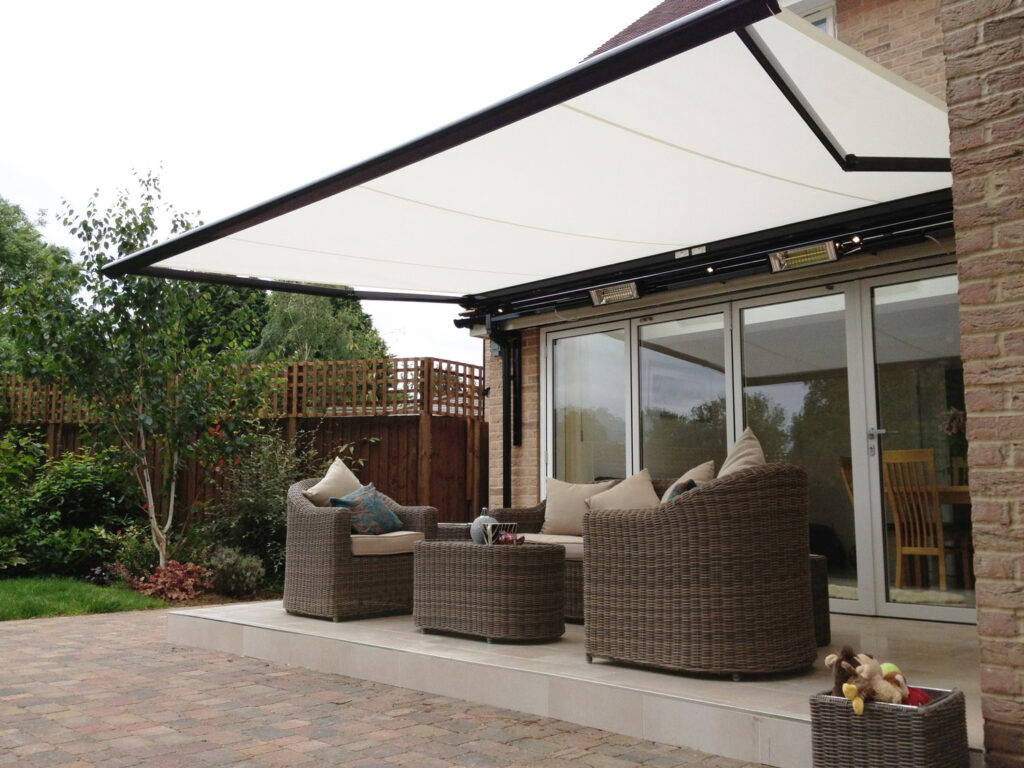
Before recommending a retractable awning, our team at Cambridge Awnings will consider how exposed the installation area is. While retracting the awning offers more control over shade in warmer weather, it’s important to ensure the system is safe. Two gardens that look very similar can experience completely different conditions. One might be protected by neighbouring houses, fencing, and mature planting, while another might be next to open countryside or on higher ground where nothing slows the wind down. An exposed position doesn’t automatically mean that retractable awnings are unsuitable. What it does mean is the garden needs to be assessed properly before deciding which product, size and installation approach makes the most sense. How Much Wind Actually Reaches Your Patio? When we talk about exposure, at Cambridge Awnings we’re interested in the conditions around the area you want to cover rather than whether your wider location is generally considered “windy”. Open countryside is an obvious example. If your garden backs directly onto fields, there might be very little between your patio and the incoming weather. Elevated properties or corner plots can also behave differently. Surrounding buildings and landscaping often provide useful shelter, but can also redirect wind. This is one reason we prefer to assess every installation individually, rather than assuming an awning that works well on one property will automatically suit the house next door. What Wind Speed Can a Retractable Awning Withstand? There is no single wind speed that applies to every retractable awning. Tested performance varies by product, size and configuration, and the completed installation still depends on correct fixing to a suitable structure. Wind resistance is commonly expressed using wind-resistance classes and the Beaufort scale. Some folding-arm awning guidance permits use up to Beaufort force 5 and requires retraction from force 6, but the relevant manufacturer’s instructions for the specific model must always take priority. Published weather-station speeds may not represent conditions at patio level. Gusts, turbulence and wind funnelled around buildings all matter. If conditions are deteriorating, retract the awning early rather than seeing how much wind it can withstand. The Size and Projection You Need The amount of shade you want also affects which garden awnings you should install. It’s easy to assume the largest awning will give you the best result. In practice, bigger isn’t always better. We would rather establish where you actually need shade. If you mainly want to cover a dining table, for example, you might not need an awning extending across the full patio. This is especially relevant in an exposed garden because the awning’s size and projection affect the overall installation assessment. Sun direction is also important. Shade doesn’t fall directly under an awning all day, so simply measuring the patio and choosing the largest possible projection isn’t necessarily the right approach. Our aim is to create enough coverage to make the outdoor living space comfortable without selling you additional size that offers little practical benefit. What is the Awning Being Fixed To? When installing a fully retractable awning, we consider the wall, available fixing positions, rooflines and other structural features before deciding which design is best. This is especially important when properties have rendered finishes, insulation systems, or other construction details that mean straightforward fixings aren’t appropriate. Over the years, we have worked on projects where the existing wall arrangement couldn’t safely accommodate the required awning installation in the normal way. In one case, we created a bespoke goalpost-style support structure instead, with supports running down the wall. That doesn’t mean a complicated support system is always necessary when a wall presents a challenge. Sometimes there is a simpler solution. For us, the key is to choose a fixing method that suits the property, rather than forcing a product to fit regardless of the circumstances. How Do You Want to Use Your Outdoor Space? This is probably the most useful question we can ask. Traditional retractable awnings provide controllable shade, so if your plan is to extend the awning over your patio on warm days and retract it when conditions deteriorate, a conventional system might be exactly what you need. Your requirements might be different if you want to use the area more frequently or your patio is regularly exposed to stronger weather. This is where we sometimes discuss pergola-style systems. Rather than projecting entirely from the property like a traditional folding-arm awning, they have posts at the front of the structure. This additional support can make a pergola-style system worth considering for certain more demanding locations or larger outdoor areas. However, we wouldn’t recommend one simply because it’s more substantial or more expensive. If a standard retractable awning safely provides the shade you want and suits how you intend to use it, there’s no reason to upgrade to a pergola system. Will Sensors Make an Exposed Location Suitable? Wind, weather and product-protection sensors can be useful additions to motorised garden awnings. Depending on the system, sensors can help respond to changing conditions and provide additional reassurance when using an awning. However, they shouldn’t compensate for a product installed in an unsuitable location. We see sensors as an additional safeguard, not a reason to ignore the garden’s characteristics. We would always rather start with an appropriate product, suitable sizing and a properly considered installation. Even with sensors, you play an important role too. If weather conditions become unsuitable, retract the awning as soon as possible rather than relying entirely on automation. Wind Sensors and Vibration Sensors Are Not the Same A conventional wind sensor monitors conditions at the sensor location. A vibration or motion sensor is fitted to the awning and reacts to movement of the front profile. Both can provide useful protection, but neither makes an unsuitable installation safe. Sensors are an additional safeguard, not a substitute for sensible sizing, sound fixings or the homeowner retracting the awning when worsening conditions are apparent. Think About Everyday Care as Well as Wind Exposure also affects how an awning should be maintained once installed. For example, if
Is a Patio Awning Suitable for a Garden Surrounded by Trees?
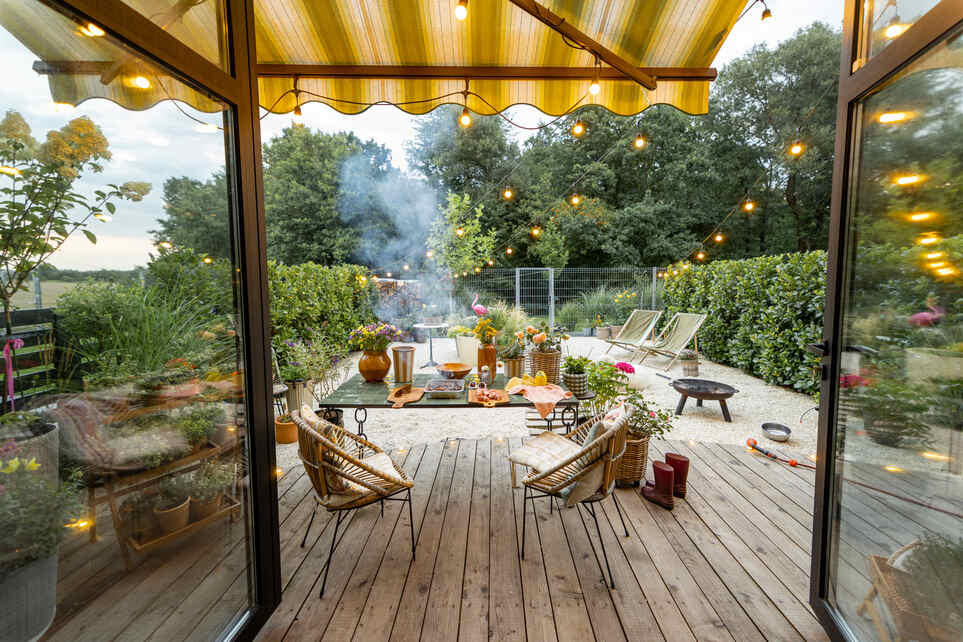
There are lots of benefits to having a garden surrounded by trees. When spending more time outdoors during the summer months, mature trees add privacy, shade, character and natural beauty, and can help create a more relaxing environment. However, when installing a patio awning, trees can introduce a few additional considerations. A common question we’re asked at Cambridge Awnings is whether they can install an awning when their garden has lots of natural greenery. The answer is usually yes, but the location needs to be carefully assessed. In many cases, a well-positioned retractable awning can work extremely well; the important thing is choosing a product that matches the surroundings and understanding how the garden environment may affect maintenance. At Cambridge Awnings, we don’t believe in recommending the biggest or most expensive system simply because it offers more features. We look at how you want to use your outdoor space, assess the practical conditions and advise on what is genuinely suitable for your home. Can You Install a Garden Patio Awning Near Trees? In most cases, nearby trees won’t rule out an awning installation. The main considerations are the position of the branches, the available clearance, and how the trees might affect the awning throughout the year. Before recommending an awning, we would look at factors such as: A branch that seems harmless on a calm day can move considerably during stronger winds, so we need to consider how the garden behaves in different conditions. We would also consider future growth. Trees can change over time, and an installation that works well today should remain practical years down the line. This is why an individual assessment is so important. Measurements alone don’t always help decide what’s best for your garden. Will Tree Sap Damage an Awning? Tree sap is one of the main issues homeowners should be aware of when installing an awning near trees. Sap can be difficult to remove because it’s sticky and attracts dust, pollen, and other debris. Over time, this can leave noticeable marks on the fabric if it’s not cleaned properly. The best approach is prevention where possible. If there are branches directly above the awning, regular trimming can help reduce the amount of sap that reaches the fabric. Where sap does appear, we recommend dealing with it carefully. Awning fabrics are designed for outdoor use, but they’re not the same as hard surfaces, such as paving slabs. Strong cleaning products or aggressive scrubbing can potentially damage the material or affect its appearance. It’s always best to follow the cleaning guidance for the specific awning fabric rather than using a multi-purpose cleaner. This is one of the reasons we discuss the surrounding garden during the planning stage. A small change to the awning’s positioning can reduce future cleaning needs without affecting how well it shades your patio area. How do Bird Droppings Affect Awning Fabric? Birds are another practical consideration in gardens with mature trees. If birds regularly sit on branches above an awning, droppings might become a more common maintenance issue. While this doesn’t mean an awning can’t be installed, it’s something worth considering. Bird droppings are easier to deal with when they’re removed quickly. If they’re left when the awning is retracted, they can become harder to clean and might stain the fabric. We recommend removing marks carefully and avoiding harsh cleaning products. Where possible, we also look at whether the awning can be positioned slightly away from the tree cover. A small adjustment can make a noticeable difference to how much cleaning and maintenance is required throughout the year. Do Leaves and Debris Create Problems? A garden with lots of trees will naturally experience more debris throughout the year. Leaves, blossoms, seeds and small twigs can all collect on an awning, particularly during autumn and spring. This means a little more attention might be needed. Before retracting an awning, it’s worth checking the fabric and removing any larger debris. Rolling leaves and twigs into the cassette can transfer dirt onto the fabric and might affect how neatly the awning closes. This is a simple habit, but it can make a big difference over time. Awnings are designed for outdoor use, but like any external feature, they benefit from regular care. A few minutes spent clearing debris is much easier than dealing with built-up dirt later. Is a Full Cassette Awning Better for Gardens With Trees? A full cassette awning can be a useful option where there are more environmental factors to consider. When retracted, the fabric and folding arms are nearly enclosed within the cassette, protecting them from general wear and tear. This can be particularly beneficial in gardens where leaves or other debris are more likely to settle. However, a full cassette doesn’t prevent the need for maintenance. The awning will still collect debris when fully extended, and nearby trees might still mean the fabric requires occasional cleaning. It’s also important to remember that the best product isn’t always the one with the most features. For some homeowners, a traditional retractable awning might provide everything they need. Choosing a full cassette should be based on the garden’s conditions and how the awning will be used, rather than simply assuming it’s the better option. Would a Pergola Awning Be More Suitable? In some gardens, a pergola awning can provide advantages. A fully supported structure can be useful when a larger space needs to be covered, when you want to create a more permanent outdoor living area, or when more protection from changing weather conditions is important. Yet, trees alone don’t automatically mean a pergola is necessary. This is a large structure that changes the garden’s appearance and layout, so it should be chosen because it solves a specific problem, not simply because it is a higher-specification product. For many homes with nearby trees, a well-positioned retractable awning will still be the most practical choice. It can provide shade when needed and retract when it’s not, offering the flexibility most homeowners are looking
Can you Leave a Garden Awning Out in the Rain? Practical Advice for Wet Awning Fabric
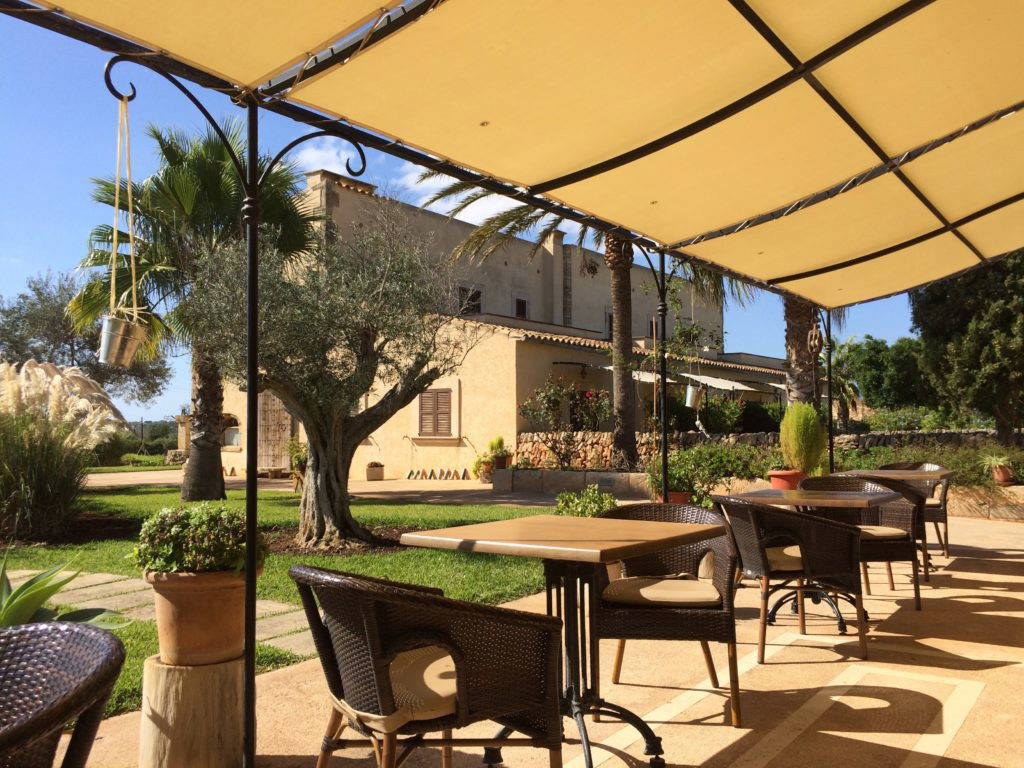
When choosing a garden awning, one thing homeowners often consider is whether it can be left open in the rain. In the UK, a warm afternoon can quickly turn into a sudden shower, and many want to know how much protection their awning can realistically provide. The honest answer is that it depends on the type of awning, how it has been installed and how you intend to use your outdoor space. A traditional retractable awning is designed primarily to provide shade during warmer weather. At the correct pitch, it can cope with a short period of light rain — typically no more than a couple of hours — but it’s not designed or intended to replace a permanent structure during heavy or prolonged rainfall. That doesn’t mean every homeowner needs a fully waterproof outdoor system. In many gardens, a traditional retractable awning is still the most practical option. Our role at Cambridge Awnings is to help you understand what each type of awning is capable of and help you choose a solution based on your specific needs. Are Retractable Awnings Waterproof? One of the biggest misconceptions about retractable awnings is that all outdoor fabrics are completely waterproof. Most modern awning fabrics are designed to be weather-resistant. They can handle exposure to sunlight, wind, and occasional rain, but there is an important difference between resisting rain and being designed to provide full waterproof protection. If your main reason for installing a garden awning is to create shade and make your outdoor living space more comfortable during sunny weather, a traditional retractable awning might be exactly what you need. However, if you want to use your outdoor space during wet weather, you might need to consider a system designed with waterproofing in mind. This is where more structural products, such as a Weinor patio roof from our Terrazza range, can be more suitable. They offer a different level of coverage and are designed for a wider range of conditions. The important point is that more protection isn’t automatically better. It only becomes worthwhile if you will genuinely benefit from the additional features. Why Standing Water Should Never Be Ignored A properly installed awning should allow rainwater to run off the fabric rather than collect in one area. This is why proper installation and pitch are so important for reducing the risk of pooling. Standing water can put unnecessary weight on the awning. As water collects, the fabric can also begin to stretch and sag, allowing even more water to gather in the same area. Over time, this places additional strain on the fabric, folding arms and fixing points. This isn’t something homeowners should ignore. If water is collecting on the awning, it’s worth investigating why. The pitch might not be suitable, the fabric might have stretched over time, or debris might be preventing water from draining properly. Addressing the cause early is the best way to prevent repeated stress on the structure. At Cambridge Awnings, we always assess the installation area carefully before recommending a product. The available height, projection, wall structure and surrounding features all influence how an awning should be positioned. What Should You Do if Your Awning Gets Wet? Occasionally, an awning will get caught in the rain. This is normal and doesn’t mean the fabric will be damaged. The important thing is what happens afterwards. If the weather improves, we recommend extending the awning again and allowing it to dry fully before leaving it closed for a long period. Keeping damp fabric tightly rolled inside the cassette can trap moisture, increasing the risk of marks, odours or mildew developing. This is particularly important when the awning isn’t being used regularly. It’s easy to retract an awning after a wet afternoon and forget about it, but allowing the fabric to dry properly helps protect it. That said, drying the fabric shouldn’t come before protecting the awning. If heavy rain is accompanied by strong winds, retracting the awning is usually the safer decision. The mechanism, arms and fixings can be under considerable stress in exposed conditions, so protecting the whole system is more important than avoiding moisture on the fabric. Does Awning Pitch Affect Rain? Yes, pitch plays an important role in how an awning handles rain. The correct angle allows water to drain away and helps prevent the fabric from becoming overloaded. However, there are lots of factors to consider when choosing the pitch, such as: A steep pitch might improve drainage but could reduce usable space under the awning. A shallow pitch might provide more headroom but require additional drainage. This is why every installation needs to be considered individually. Should You Use Wind Sensors? Wind sensors are a useful addition to many electric awnings, particularly for homeowners who won’t always be outside when weather conditions change. A sensor can detect increased movement and automatically retract the awning, helping reduce the risk of damage. However, we always explain that sensors are an extra safeguard, not a replacement for sensible use. No sensor can predict every change in weather, and sudden gusts can quickly affect an awning. You should still retract the awning if bad weather is predicted. The same principle applies to rain. A sensor can be helpful, but it doesn’t change how the awning should be cared for to extend its lifespan. When is a Waterproof Awning System Worth Considering? For some homeowners, a traditional retractable awning is all they need. For others, a more substantial structure makes sense. A Weinor patio roof from our Terrazza range might be worth considering if: However, we wouldn’t recommend upgrading to a larger system simply because it offers more features. If a customer mainly wants shade during the summer months, a standard awning might provide the best balance of flexibility, appearance and cost. Simple Ways to Protect a Garden Awning Good maintenance isn’t complicated. A few simple habits can help keep your garden awning in good condition all year round: Small issues are usually easier to resolve when
OUTDOOR KITCHEN SHADE IDEAS

Creating A Space You’ll Want To Use More Often Outdoor kitchens have become one of the fastest-growing trends in outdoor living. And it’s easy to see why. They bring together: all within a single outdoor environment. However, one challenge is often overlooked. Comfort. Because even the most impressive outdoor kitchen becomes less enjoyable if it’s too hot, too bright, or uncomfortable to use. The Most Successful Outdoor Kitchens Focus On People Many homeowners initially focus on: Whilst these are important, the most successful outdoor kitchens are designed around people. The key question is: “How will the space actually be used?” Why Shade Matters Outdoor cooking naturally encourages people to gather. Without shade, however, the area can quickly become uncomfortable. Common challenges include: The result is often a space that looks fantastic but isn’t used as often as hoped. Think Beyond The Cooking Area One of the most common mistakes is focusing entirely on shading the chef. In reality, it’s often equally important to think about: After all, outdoor kitchens are usually social spaces. Creating Different Zones Many successful outdoor living projects include a combination of: This helps the garden feel more natural and enjoyable. More Than Just Summer An outdoor kitchen isn’t only about hot sunny afternoons. Many homeowners enjoy using these spaces for: Comfort helps extend the usefulness of the space far beyond a handful of sunny days. Which Solutions May Be Suitable? Depending on the property and objectives, we may discuss: The most suitable solution depends on how you’d like to use the space. Think About The Experience Imagine: That’s usually the real objective. The products simply help create the environment where those moments can happen. Start With The Lifestyle The best outdoor kitchens aren’t built around equipment. They’re built around experiences. Think about: The answers often shape the best design decisions. Our Advice Don’t just design an outdoor kitchen. Design an outdoor living experience. The most memorable spaces are rarely defined by what they contain. They’re defined by how they make people feel. Ready To Create The Perfect Outdoor Kitchen Space? If you’re planning an outdoor kitchen or entertaining area, we’d be delighted to discuss your ideas and help you explore the available options. No pressure. No obligation. Just honest advice and practical guidance.
WEST-FACING PATIO SOLUTIONS
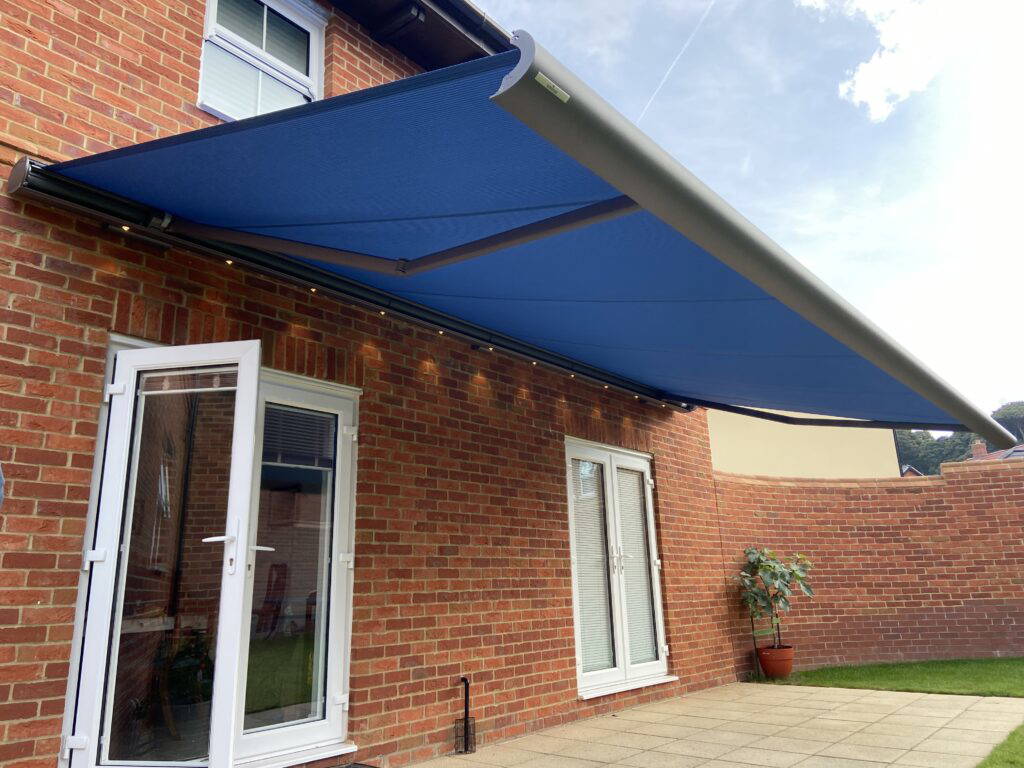
Beautiful Evenings – And Sometimes A Few Challenges West-facing patios are often highly desirable. They provide: However, they can also create some very specific challenges. The Problem With Low Evening Sun Many homeowners tell us: “The patio is lovely until the evening.” or “The sun shines straight into the house.” Unlike overhead midday sunlight, evening sun often arrives at a much lower angle. This can create: Why West-Facing Properties Are Different The challenge isn’t necessarily the amount of sunshine. It’s the timing. The strongest sunlight often arrives precisely when homeowners want to: As a result, comfort can become an issue. Understanding The Space Before recommending solutions, it’s important to understand: The answers often influence the most appropriate approach. Common Objectives Homeowners with west-facing patios frequently tell us they want: These goals help guide the design process. Think Beyond The Product As always, the objective isn’t simply installing an awning. The objective is creating a more enjoyable outdoor living experience. The product is merely one part of that solution. The Good News West-facing patios can be some of the most enjoyable outdoor spaces available. The key is understanding how the space is used and addressing the challenges that accompany evening sun. Our Advice If your patio becomes uncomfortable during the late afternoon or evening, don’t assume you have to live with it. There are often ways to improve comfort significantly. The first step is understanding the problem properly. Ready To Explore The Possibilities? If you’re struggling with a west-facing patio, we’d be delighted to discuss the available options and help you create a more comfortable outdoor space. No pressure. No obligation. Just honest advice and practical guidance.
SOUTH-FACING GARDEN IDEAS
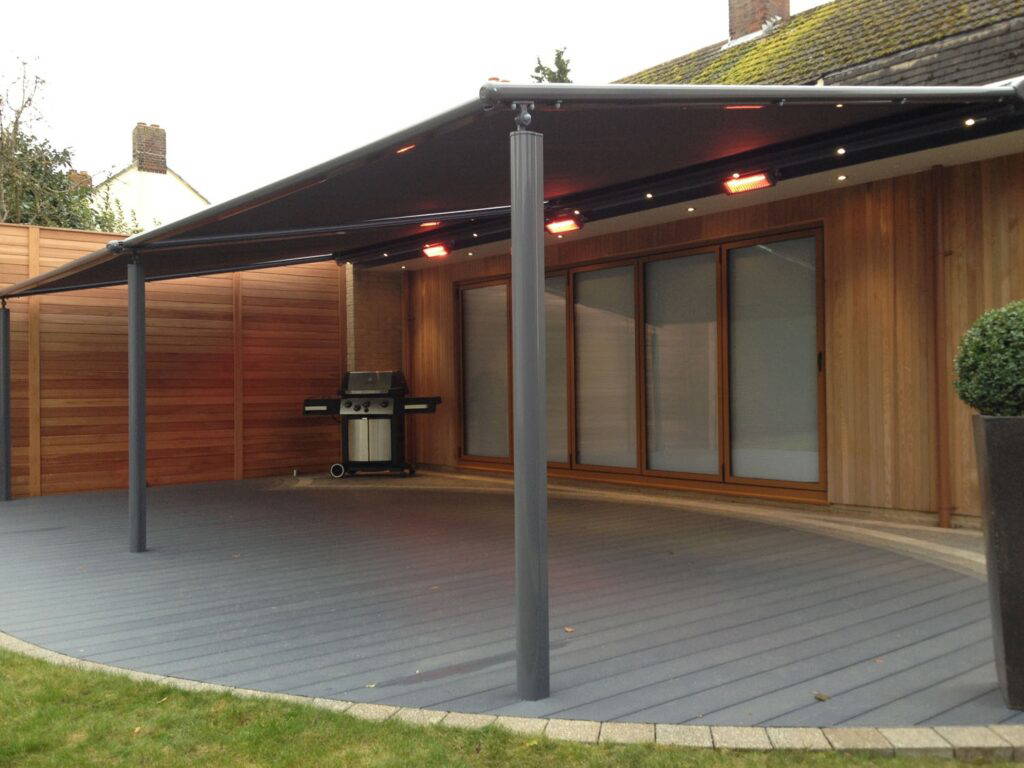
A Wonderful Problem To Have Many homeowners dream of owning a south-facing garden. And for good reason. South-facing spaces often enjoy: However, they can also present some unique challenges. Too Much Sun Can Reduce Enjoyment It may sound strange, but some of the hottest and sunniest gardens become the least used. Common comments include: These are surprisingly common experiences. Creating Comfortable Zones One of the most effective approaches is creating a variety of environments within the garden. Rather than relying entirely on direct sunshine, consider including: The objective is choice. Think About How You Use The Garden Questions worth asking include: The answers help shape suitable solutions. Shade Creates Flexibility Many homeowners discover that introducing shade doesn’t reduce enjoyment. It increases it. A comfortable shaded area often becomes the most frequently used part of the garden during warmer weather. More Than Just Summer South-facing gardens aren’t only about hot summer afternoons. They’re also ideal for: The right design helps maximise enjoyment throughout the year. Common Outdoor Living Goals Many customers with south-facing gardens tell us they would like: These objectives often guide the most successful projects. Start With The Lifestyle Don’t begin by asking: “What product do I need?” Instead ask: “How would I like to use my garden?” That’s usually where the best solutions begin. Our Advice A south-facing garden is an asset. The goal isn’t blocking the sunshine. The goal is creating comfortable spaces that allow you to enjoy it more often. Ready To Make More Of Your South-Facing Garden? We’d be delighted to discuss your outdoor space, explore the possibilities, and help you create a garden that’s comfortable throughout the day. No pressure. No obligation. Just honest advice and practical guidance.
KEEPING THE HOUSE COOLER IN SUMMER

When Sunshine Becomes Too Much Of A Good Thing Most homeowners love natural light. Large windows. Bi-fold doors. Sliding doors. Roof lanterns. They can completely transform a property. However, during warmer months, those same features can sometimes create an unexpected problem. Excessive heat. This is one of the most common reasons homeowners contact us. Why Modern Homes Get So Warm The answer is usually simple. Large areas of glazing allow sunlight into the property. Whilst this creates bright, attractive living spaces, it can also allow significant solar heat to enter the home. This is particularly noticeable in: The Challenge With Internal Cooling Many people attempt to address the issue once the heat has already entered the room. By that stage, the energy has already passed through the glass. Cooling the room afterwards can be difficult and sometimes expensive. Why External Shading Works Differently External shading takes a different approach. Instead of dealing with heat after it enters the property, sunlight is intercepted before it reaches the glazing. This can help reduce: The result is often a noticeably more comfortable environment. Benefits Beyond Temperature Many homeowners initially focus on reducing heat. What they often discover is a range of additional benefits. These can include: The improvements often extend beyond the room itself. Which Properties Benefit Most? Whilst every property is different, the greatest benefits are often seen in homes featuring: These spaces frequently experience significant solar gain during warm weather. Think About Comfort Rather Than Temperature The objective isn’t necessarily making the house cold. The objective is making it more comfortable. A few degrees can make a remarkable difference to how a room feels and how enjoyable it is to use. Our Advice If you’re finding certain rooms uncomfortable during summer, don’t immediately assume the answer lies inside the property. Sometimes the most effective solution starts outside. Ready To Explore The Possibilities? If your home becomes too warm during sunny weather, we’d be delighted to discuss the available options and help you create a more comfortable living environment. No pressure. No obligation. Just honest advice and practical guidance.