
Can a Retractable Awning Protect You From Low Evening Sun?
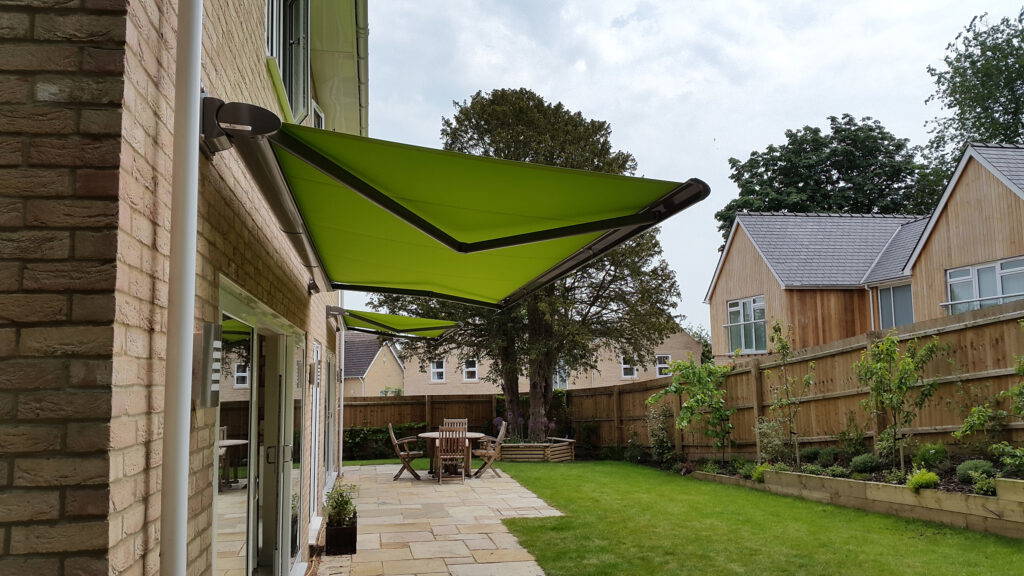
West-facing gardens can be some of the most desirable outdoor spaces. They provide beautiful afternoon and evening sunshine, making them ideal for outdoor dining and relaxing. The difficulty is that the same sunlight can become uncomfortable when it drops lower in the sky. If the sun is high, a retractable awning can create useful overhead shade. But by the evening, the angle changes. Low western sun can travel almost horizontally across a patio, passing underneath an overhead awning rather than being blocked by it. This means simply choosing a larger awning isn’t the answer. If low evening sun is the main problem, we first need to understand where the light is coming from, where you sit and whether you’re trying to shade the patio or stop sunlight reaching doors and windows. Why Is Low Evening Sun Difficult to Manage? The challenge with evening sun isn’t the amount of sunlight; it’s the angle. Around midday, the sun sits higher in the sky, so an awning can provide effective shade and make a patio more comfortable during strong daytime sunshine. Later in the day, the sun drops much lower, especially in west-facing gardens. Instead of shining down onto the patio, the sun shines directly toward outdoor seating areas, windows, or doors. Even with a generous projection, sunlight can still get underneath a patio awning. Simply choosing a larger awning might move the shade edge farther across the patio, but it can’t turn an overhead cover into vertical shading. This is why it’s important to look at how the sun behaves in your garden before deciding what to install. Will a Retractable Awning Still Help? This is one of the most important things to understand before choosing a garden awning. While a retractable awning can provide excellent overhead shade, it’s not designed to block every angle of sunlight throughout the day. In a west-facing garden, the patio gets strong sunshine for several hours before the sun drops low; an awning can provide comfortable shade over seating and dining areas. However, the limitation comes later in the day. As the sun starts to set, more direct light can enter under the front of the awning or from one side. At that point, extending the awning further won’t necessarily solve the problem. This doesn’t mean the awning has stopped doing its job; you’ve just reached the point where overhead shade is no longer the right type of shade for the angle of sunlight. Understanding that before installation helps you choose a system based on what it can realistically achieve rather than expecting one product to solve every type of sunlight throughout the day. What Works Better for Low Evening Sun? When sunlight comes towards you rather than down from above, vertical shading is much more effective. The right option depends on the direction the low sun is entering the patio. In a west-facing garden, the evening sun often comes toward the front of the awning. In this situation, a side screen alone won’t solve the problem. A drop-down front valance can be more effective as it provides vertical shading at the front edge of the awning. Weinor’s Valance Plus is available on the Opal Design II, Topas II and Semina Life awnings. It can drop up to 210 cm, helping block lower sunlight coming toward the front of the patio. However, you must specify this when ordering the awning, as you can’t add it later. Where sunlight reaches the patio from an angle, a Weinor Paravento side screen can provide useful additional shade. It can also help with privacy around a seating or dining area, but it’s designed for sunlight entering from the side rather than directly from the front. External zip blinds are another option, particularly when strong evening sun reaches bi-fold, sliding, or other large glazed doors. As they sit outside the glass, they can intercept sunlight before it enters the room. Does the Position of Your Patio Matter? Very much so. The same awning can perform very differently depending on where it’s installed. A west-facing garden in Cambridge might be partly sheltered by neighbouring buildings, mature trees or fencing, which can block some of the lower evening sun. A more open property elsewhere in Cambridgeshire can continue receiving direct sunlight until much closer to sunset. We also consider where the outdoor seating area is positioned. If your dining table sits directly outside the house, an awning might provide useful shade for part of the afternoon, but if it’s positioned differently, the shadow might fall somewhere you don’t actually need it. Mounting height is important too because it affects where the shade lands as the sun moves. This is why patio width alone tells us relatively little. When we survey a property, we focus on when the sun becomes uncomfortable and exactly where it reaches. Do You Need a Pergola System for Evening Sun? Not simply because the sun is low. A pergola system still provides overhead shading like a retractable awning, so it doesn’t solve the basic problem of sunlight travelling horizontally. If low evening sun is your concern, the key question is whether you need vertical shading. A pergola system might suit a property for other reasons, such as the size of the area being covered, the need for additional structural support, or how you want to define the outdoor living space. Those are separate considerations. We don’t recommend moving to a pergola system purely to address low western sun. What Should You Consider Before Choosing an Awning? Before choosing a garden awning, think about when the patio becomes uncomfortable. If the problem occurs during the middle of the afternoon while the sun is still reasonably high, an overhead awning might provide the shade you need. If the problem happens later in the day, you might need vertical protection as well. It’s also worth separating outdoor comfort from indoor comfort. Shading an outdoor dining table is a different problem from stopping strong evening sunlight coming through large bi-fold or sliding