
Is a Patio Awning Suitable for a Garden Surrounded by Trees?
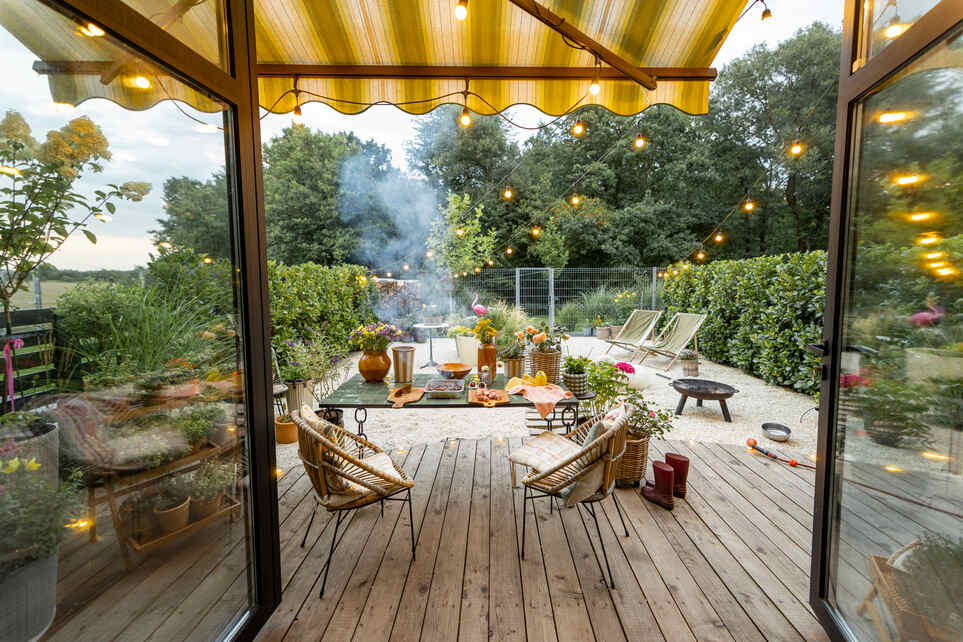
There are lots of benefits to having a garden surrounded by trees. When spending more time outdoors during the summer months, mature trees add privacy, shade, character and natural beauty, and can help create a more relaxing environment. However, when installing a patio awning, trees can introduce a few additional considerations. A common question we’re asked at Cambridge Awnings is whether they can install an awning when their garden has lots of natural greenery. The answer is usually yes, but the location needs to be carefully assessed. In many cases, a well-positioned retractable awning can work extremely well; the important thing is choosing a product that matches the surroundings and understanding how the garden environment may affect maintenance. At Cambridge Awnings, we don’t believe in recommending the biggest or most expensive system simply because it offers more features. We look at how you want to use your outdoor space, assess the practical conditions and advise on what is genuinely suitable for your home. Can You Install a Garden Patio Awning Near Trees? In most cases, nearby trees won’t rule out an awning installation. The main considerations are the position of the branches, the available clearance, and how the trees might affect the awning throughout the year. Before recommending an awning, we would look at factors such as: A branch that seems harmless on a calm day can move considerably during stronger winds, so we need to consider how the garden behaves in different conditions. We would also consider future growth. Trees can change over time, and an installation that works well today should remain practical years down the line. This is why an individual assessment is so important. Measurements alone don’t always help decide what’s best for your garden. Will Tree Sap Damage an Awning? Tree sap is one of the main issues homeowners should be aware of when installing an awning near trees. Sap can be difficult to remove because it’s sticky and attracts dust, pollen, and other debris. Over time, this can leave noticeable marks on the fabric if it’s not cleaned properly. The best approach is prevention where possible. If there are branches directly above the awning, regular trimming can help reduce the amount of sap that reaches the fabric. Where sap does appear, we recommend dealing with it carefully. Awning fabrics are designed for outdoor use, but they’re not the same as hard surfaces, such as paving slabs. Strong cleaning products or aggressive scrubbing can potentially damage the material or affect its appearance. It’s always best to follow the cleaning guidance for the specific awning fabric rather than using a multi-purpose cleaner. This is one of the reasons we discuss the surrounding garden during the planning stage. A small change to the awning’s positioning can reduce future cleaning needs without affecting how well it shades your patio area. How do Bird Droppings Affect Awning Fabric? Birds are another practical consideration in gardens with mature trees. If birds regularly sit on branches above an awning, droppings might become a more common maintenance issue. While this doesn’t mean an awning can’t be installed, it’s something worth considering. Bird droppings are easier to deal with when they’re removed quickly. If they’re left when the awning is retracted, they can become harder to clean and might stain the fabric. We recommend removing marks carefully and avoiding harsh cleaning products. Where possible, we also look at whether the awning can be positioned slightly away from the tree cover. A small adjustment can make a noticeable difference to how much cleaning and maintenance is required throughout the year. Do Leaves and Debris Create Problems? A garden with lots of trees will naturally experience more debris throughout the year. Leaves, blossoms, seeds and small twigs can all collect on an awning, particularly during autumn and spring. This means a little more attention might be needed. Before retracting an awning, it’s worth checking the fabric and removing any larger debris. Rolling leaves and twigs into the cassette can transfer dirt onto the fabric and might affect how neatly the awning closes. This is a simple habit, but it can make a big difference over time. Awnings are designed for outdoor use, but like any external feature, they benefit from regular care. A few minutes spent clearing debris is much easier than dealing with built-up dirt later. Is a Full Cassette Awning Better for Gardens With Trees? A full cassette awning can be a useful option where there are more environmental factors to consider. When retracted, the fabric and folding arms are nearly enclosed within the cassette, protecting them from general wear and tear. This can be particularly beneficial in gardens where leaves or other debris are more likely to settle. However, a full cassette doesn’t prevent the need for maintenance. The awning will still collect debris when fully extended, and nearby trees might still mean the fabric requires occasional cleaning. It’s also important to remember that the best product isn’t always the one with the most features. For some homeowners, a traditional retractable awning might provide everything they need. Choosing a full cassette should be based on the garden’s conditions and how the awning will be used, rather than simply assuming it’s the better option. Would a Pergola Awning Be More Suitable? In some gardens, a pergola awning can provide advantages. A fully supported structure can be useful when a larger space needs to be covered, when you want to create a more permanent outdoor living area, or when more protection from changing weather conditions is important. Yet, trees alone don’t automatically mean a pergola is necessary. This is a large structure that changes the garden’s appearance and layout, so it should be chosen because it solves a specific problem, not simply because it is a higher-specification product. For many homes with nearby trees, a well-positioned retractable awning will still be the most practical choice. It can provide shade when needed and retract when it’s not, offering the flexibility most homeowners are looking